 |
Milestones
|
|
|
|
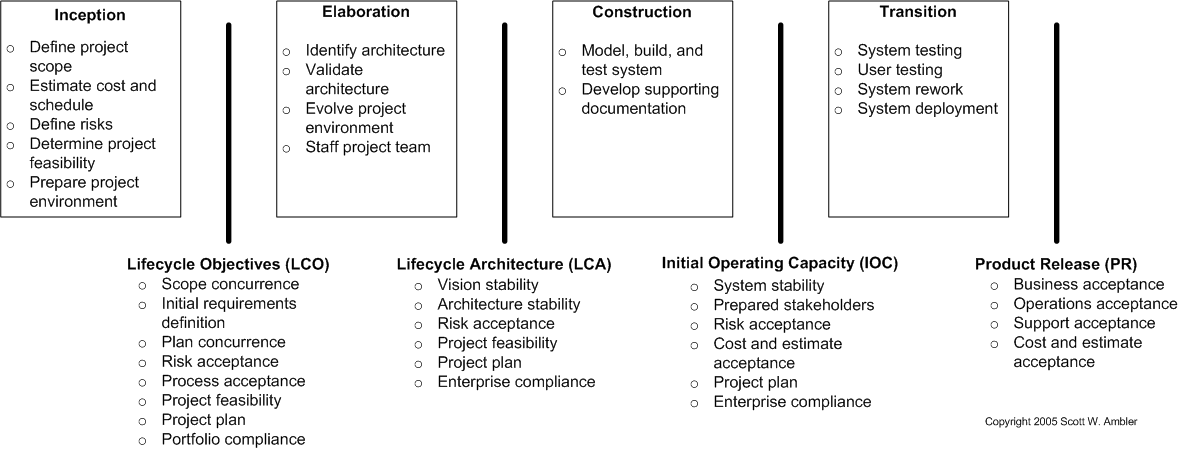
As you can see in Figure 1, there are four milestones in the AUP. At
each of these milestones, which signal the end of the phase, you should consider
having a "milestone review" which verifies that your team has successfully
fulfilled the milestone criteria. The four milestones are:
- Lifecycle Objectives (LCO)
- Lifecycle Architecture (LCA)
- Initial Operating Capacity (IOC)
- Product Release (PR)
Figure 1. The Phases and Milestones of the AUP.
At this milestone, the stakeholders assess the state of the project. They
must agree on the following:
- Scope concurrence. The stakeholders reach agreement as to the
scope of the project.
- Initial requirements definition. There is agreement that the right
set of requirements have been captured, at a high level, and
there is a shared understanding of those requirements.
- Plan concurrence. The stakeholders agree with the initial cost and
schedule estimates.
- Risk acceptance. The risks have been identified, assessed, and
acceptable strategies to address them have been identified.
- Process acceptance. The AUP has been initially
tailored and agreed to by all parties.
- Feasibility. The project makes
sense from business, technical, and operational perspectives.
- Project plan. Adequate plans are in place for the next phase
(Elaboration).
- Portfolio compliance. Does the scope of the project fit well
into your organization's overall project portfolio?
At this milestone, the stakeholders assess the state of the project. They
must agree on the following:
- Vision stability. The project vision has stabilized and is
realistic.
- Architecture stability. You agree that the architecture is stable
and sufficient to satisfy the requirements. The architecture has been
prototyped where appropriate to address major architectural risks.
- Risk acceptance. The risks have been assessed to ensure they have
been properly understood and documented and strategies to handle them are
acceptable.
- Feasibility. The project still makes
sense from business, technical, and operational perspectives.
- Project plan. Detailed iteration plans for the next few
Construction iterations, as well as a high-level project plan, are in place.
- Enterprise compliance. Does the system architecture reflect
the realities of the enterprise architecture?
At this milestone, the stakeholders must agree on the following:
- System stability. The software and supporting documentation are
acceptable (stable and mature) to deploy the system to users.
- Prepared stakeholders. The stakeholders (and the business) are
ready for the system to be deployed (although may still need training).
- Risk acceptance. The risks have been assessed to ensure they have
been properly understood and documented and strategies to handle them are
acceptable.
- Cost and estimate acceptance. The current expenditures are
acceptable and reasonable estimates have been made for future costs and
schedules.
- Project plan. Detailed iteration plans for the next few
Transition
iterations, as well as a high-level project plan, are in place.
- Enterprise compliance. Do the work products produced by
the team comply to the appropriate enterprise standards?
At this milestone, the stakeholders must agree on the following:
- Business stakeholder acceptance. The business stakeholders are
satisfied with, and accept, the system.
- Operations acceptance. The people responsible for operating the
system once it is in production are satisfied with the relevant
procedures and
documentation.
- Support acceptance. The people responsible for support the system
once it is in production are satisfied with the relevant
procedures and
documentation.
- Cost and estimate acceptance. The current expenditures are
acceptable and reasonable estimates have been made for future production costs.
